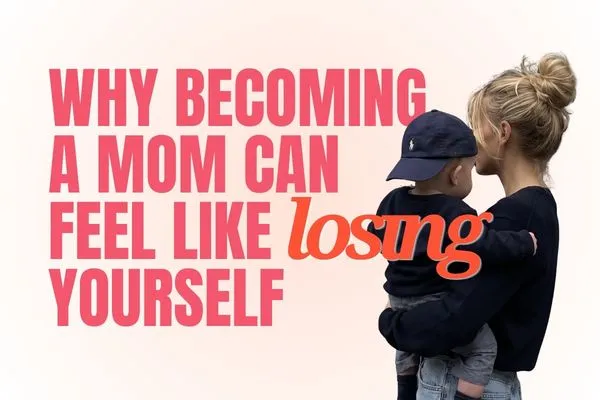
Matrescence: Why Becoming a Mother Can Feel Like Losing Yourself
Motherhood Journey, Matrescence, New Moms, Emotional Transition, Parenting Challenges
Matrescence in 2026: Why Becoming a Mother Can Feel Like Losing Yourself
Everyone prepares you for the baby. The feeding, the sleep, the diapers, the endless Googling of whether whatever your baby is doing is normal.
But nobody really prepares you for what happens to you.
Becoming a mother can change the way you see your relationships, your career, your body, your priorities, your freedom, and even the life you thought you wanted. You can love this tiny person more than you knew was possible and still find yourself wondering:
Wait...where did I go?
There’s actually a name for this transition: matrescence.
And if becoming a mom has left you feeling like you don’t completely recognize yourself anymore, it doesn’t necessarily mean something has gone wrong. You’re adjusting to one of the biggest identity shifts of your life.
What Is Matrescence?
Matrescence is the physical, psychological, emotional, social, and identity transition that happens as you become a mother.
Think of it a little like adolescence. Your body changes, your hormones shift, your relationships evolve, and your sense of who you are is being rewritten. Except this time, you’re expected to navigate all of that while keeping a tiny human alive and functioning on significantly less sleep.
We spend a lot of time talking about how having a baby changes your life, but not nearly enough time talking about how becoming a mother can change you.
Your priorities may shift. Your relationship might feel different. Your friendships can change. The career you spent years building might suddenly matter more, less, or just differently. You might start thinking about your own childhood in ways you never did before.
And somewhere in the middle of all that change, you might catch yourself thinking, I don't know who I am anymore.
That’s one of the reasons I think understanding matrescence can be so helpful. Maybe you aren’t failing to “adjust” to motherhood. Maybe you’re still figuring out who you are within it.
You Can Love Being a Mom and Miss Who You Were Before
One of the hardest things about motherhood is how many seemingly opposite feelings can exist at the exact same time.
You can love your baby and miss your old life. You can be grateful to be a mom and resent how much has been asked of you. You can desperately want a break and miss your baby twenty minutes after getting one.
You can feel more fulfilled than ever and somehow less like yourself.
Two things can be true at the same time.
But when we’re surrounded by messages about how motherhood is supposed to feel, those contradictions can quickly turn into guilt.
Shouldn't I be happier? Why do I miss my old life? Why am I jealous that my partner gets to leave the house? Does wanting time away from my baby make me a bad mom?
Having those thoughts doesn't mean you don't love your child. You didn't stop being a human being with needs, ambitions, preferences, relationships, and an identity the second someone started calling you “Mom.”
Sometimes the Hardest Parts of Motherhood Aren’t Actually About the Baby
Of course, sleep deprivation and the demands of caring for a baby are hard. But underneath the exhaustion, there can also be something much bigger happening: you’re renegotiating your entire life.
Your time isn't completely yours anymore. Before having a baby, you probably didn't think twice about taking a shower, going for dinner, staying late at work, or spending a Saturday doing absolutely nothing. Now, even basic things can require planning around naps, feeds, childcare, and whatever mood your tiny boss happens to be in that day.
Losing some of that spontaneity can feel like a loss. That doesn't mean you want your old life back. It means you can love the life you have now and still miss parts of the freedom you used to have.
Your relationships can shift too. You and your partner are learning how to be parents at the same time you're trying to remember how to be partners. The mental load gets heavier. Sleep gets shorter. Intimacy can change. Tiny resentments can start stacking up surprisingly quickly.
Then there are friendships and work. Maybe you feel disconnected from friends who aren't in the same season. Maybe you're lonely but don't have the energy to socialize. Maybe you couldn't wait to go back to work and then felt guilty for enjoying it. Or maybe the career you spent years building suddenly doesn't feel as important as it once did.
Motherhood has a way of making you reevaluate things you thought you'd already figured out.

Love and exhaustion can coexist; both are valid parts of matrescence.
“I Just Want to Feel Like Myself Again”
I hear versions of this from women all the time, and I understand why. When everything feels unfamiliar, of course you want to get back to the version of yourself you knew.
But I think there may be a more useful question than:
“How do I get the old me back?”
Maybe it's: “Who am I now?”
The goal doesn't have to be squeezing yourself back into your pre-baby life and pretending nothing happened. Something did happen. You became a mother, and that experience gets to change you.
The challenge is figuring out how motherhood becomes part of your identity without becoming your entire identity.
You're still allowed to care about your career, friendships, relationship, body, sex life, ambitions, travel, creativity, alone time, or whatever else makes you feel like you. Becoming a mom doesn't require you to stop being a person outside of motherhood.
You Don’t Have to “Bounce Back”
We talk about bouncing back after having a baby constantly. Your body should bounce back. Your relationship should bounce back. Your sex life, productivity, career, social life...apparently everything should return to normal as quickly as possible.
But what if you're not supposed to go backward?
What if you're allowed to become someone new?
That doesn't mean abandoning the person you were before motherhood. Some parts of her might come roaring back. Some might matter even more now. Others might not fit anymore. And there may be completely new parts of yourself that you're only beginning to meet.
Instead of asking, How do I get my old life back?, you might start getting curious about questions like:
What still feels like me?
What doesn't anymore?
What do I genuinely miss?
What have I outgrown?
What do I want more of in this version of my life?
What am I doing because I want to, and what am I doing because I think that's what a “good mom” should do?
You don't need to have all of those answers right now. Part of matrescence is giving yourself the space to figure them out.

Small reflective moments help you reconnect with who you are becoming.
How Do You Reconnect With Yourself After Becoming a Mom?
You probably don't need another morning routine. And I'm definitely not going to tell you to wake up before your baby so you can journal, meditate, exercise, drink lemon water, and somehow become your best self before 6 a.m.
Reconnecting with yourself can be much smaller than that.
Start by paying attention to what you miss. Not because you need to recreate your old life exactly, but because what you miss can tell you something about what matters to you.
Maybe you miss working. Maybe you miss getting dressed and feeling good in your clothes. Maybe you miss seeing your friends, exercising, travelling, being creative, having sex, or doing absolutely nothing without feeling like you should be doing something else.
Then ask yourself how you can bring some of that back into the life you have now.
It doesn't have to be a weekend away or an elaborate self-care routine. Sometimes it's an hour to work on something that matters to you, going for coffee alone, making plans with a friend, moving your body, or asking your partner to take over bedtime because you need to not be needed for a minute.
You deserve to exist inside your own life too.
When Therapy Can Help With Matrescence
Sometimes matrescence feels uncomfortable because you're growing and adjusting. And sometimes what you're experiencing deserves additional support.
If you're persistently feeling hopeless, intensely anxious, disconnected from yourself or your baby, unable to function, or simply feel like something isn't right, talk with your doctor or another qualified healthcare professional. Postpartum depression, anxiety, and other perinatal mental health concerns can overlap with some of the emotional challenges of matrescence, and you don't have to figure out the difference on your own.
Therapy can also give you somewhere to talk about the parts of motherhood you might not feel comfortable saying anywhere else: the resentment, guilt, identity loss, relationship changes, career questions, loneliness, or even the I love my baby more than anything and sometimes I don't know if I love being a mom thoughts.
You don't need to show up already knowing what's wrong or what you want to change. Sometimes we start with “I don't feel like myself anymore” and figure out the rest from there.
You Haven’t Disappeared. You’re Still Becoming.
Motherhood adds an entirely new identity to your life, and learning how that identity fits alongside all the other parts of you takes time.
There may be pieces of your old life you want back, pieces you've completely outgrown, pieces you want to rebuild differently, and entirely new parts of yourself you're still discovering.
That's matrescence.
It isn't necessarily about getting your old self back or becoming a completely different person. It's about figuring out how motherhood fits into the person you already were, the person you've become, and the person you're still becoming.
So maybe the question isn't:
“When will I feel like myself again?”
Maybe it's:
“What does feeling like myself look like now?”
If you're navigating the identity shift that comes with motherhood and want somewhere to unpack it without judgment, I offer online therapy for women navigating motherhood, identity changes, relationships, career shifts, and those messy in-between seasons where you're not quite sure what comes next.
You can book a free 15-minute consultation to see if working together feels like a good fit. No pressure and no expectation that you have it all figured out. We can start exactly where you are.